
Interesting Seaweed Facts
As we keep moving forward with our seaweed pressing adventure, our curiosity about these amazing ocean plants just keeps growing. We've put together this blog post to share all the great discoveries we've picked up along the way.
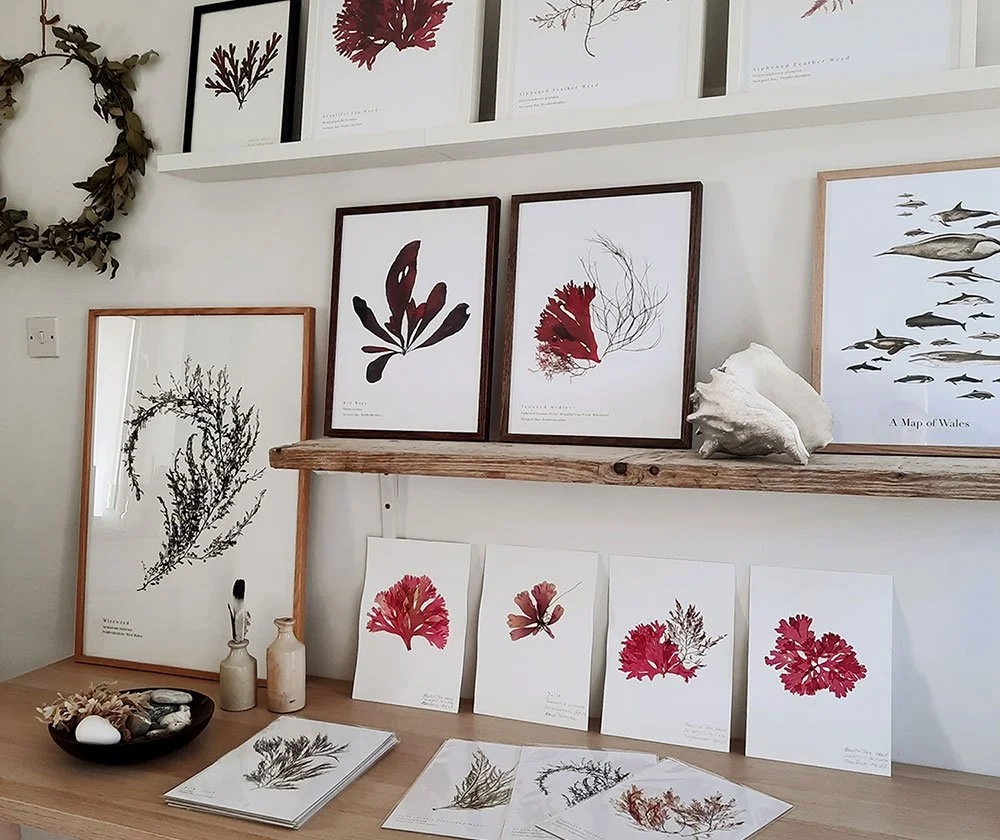
Our Studio Space
Our seaweed prints displayed at our Studio in Dinas Cross, Pembrokeshire.
Our studio welcomes a wide variety of people, from folks looking for something to pretty their living room walls to marine biologists whom help us to learn so much more about the seaweeds we press.
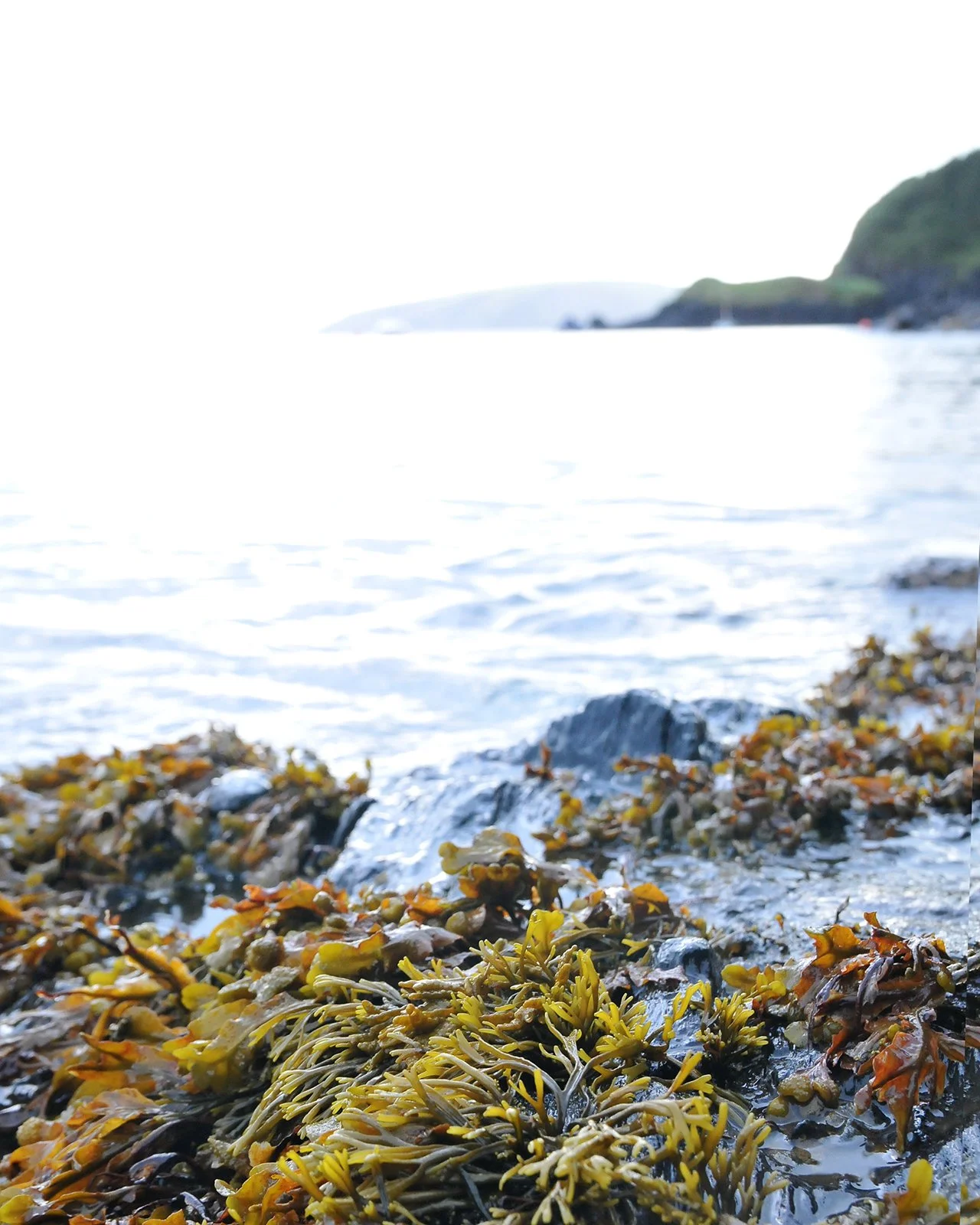
A beautiful display of Wracks
Different varieties of Wracks growing at Cwm-yr-Eglwys beach.
Lots of studio visitors wonder whether seaweeds truly deserve their 'weed' name, and actually that word in this context is pretty misleading. Seaweeds are marine macroalgae, not land plants at all. Unlike land plants, they lack true roots, stems, leaves, and vascular systems (Grab an insight into seaweed anatomy here: https://getkelp.com/seaweed-anatomy/). Plus, they're mostly not unwanted pest plants that damage their environment. In fact, they're quite the opposite—they're the backbone of every marine food web and create essential habitats for fish and other invertebrates. And seaweeds generate a significant portion of Earth's oxygen while also absorbing and storing carbon dioxide, which helps fight greenhouse gases.
So the answer is clearly: no, seaweeds definitely aren't weeds in the traditional sense!
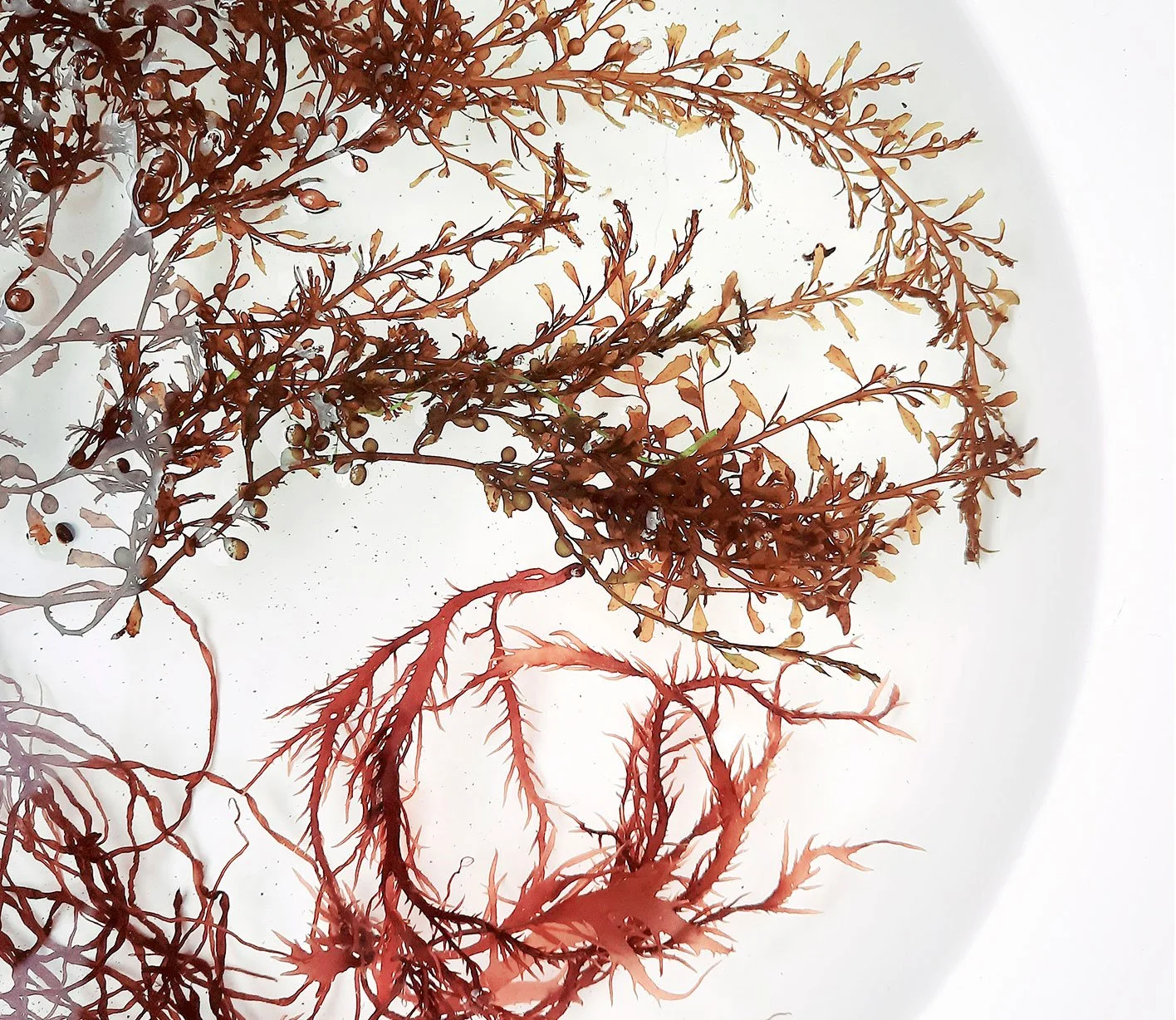
Foraged loose seaweeds
We collect washed up or floating free seaweed for our prints - if you want to forage it to eat, read on below...
Another common question we get is - can you eat all types of seaweed?
The straightforward answer is no. To be sure, steer clear of freshwater algae entirely, and certain marine varieties like Acid Weed (Desmarestia) release sulphuric acid when harvested, which can lead to serious stomach discomfort if consumed. You'll find Acid Weed along the coasts of Pembrokeshire and also Anglesey in Wales.
While most other seaweed species are safe to eat (check out https://en.wikipedia.org/wiki/Edible_seaweed for more details), it's still wise to be cautious. Here's a helpful tip: harvest living seaweed plants rather than collecting washed-up seaweed from the shore, as the latter can harbour harmful bacteria. When harvesting seaweed (guide to harvesting: https://cdn.cyfoethnaturiol.cymru/696117/gn-011-detailed-guidance-harvesting-seaweed.pdf), take some important precautions too - pay attention to your surroundings and keep away from any pollution sources, since seaweed acts like a sponge and can soak up heavy metals if growing in contaminated or industrial waters. Don't forget to check local tide times and ranges as well.
If you'd prefer to sample seaweed without foraging for it yourself, our nearest seaweed farm Car-y-Mor, which is located just a few miles away at St Davids, offer a selection of dried seaweeds worth trying. Our personal favourites are Dulse and Laver, which bring wonderful umami flavours to virtually any dish.
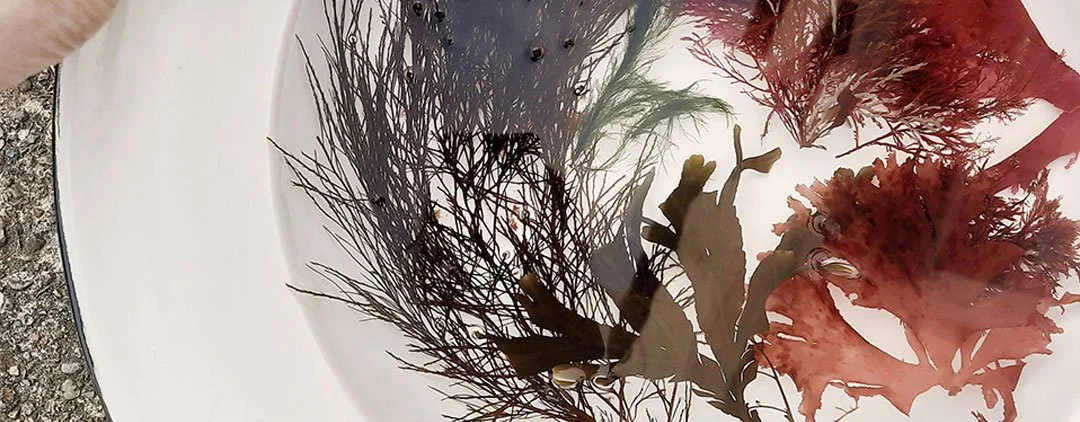
Some 1.6 billion years in the making
The most ancient plants still thriving on Earth today?
Another interesting fact is that seaweeds rank among the most ancient plants still thriving on Earth today—they've been around far longer than Mosses and Liverworts, Horsetails, and Cycads, by millions of years! Based on fossil evidence, the Red Seaweed group (Rhodophyta) is believed to have existed for approximately 1.6 billion years. Green seaweed (Chlorophyta) dates back roughly 1 billion years, while brown seaweeds (Phaeophyceae) are thought to have first appeared around 450 million years ago—right around the time when the earliest Mosses and Liverworts began to show up.
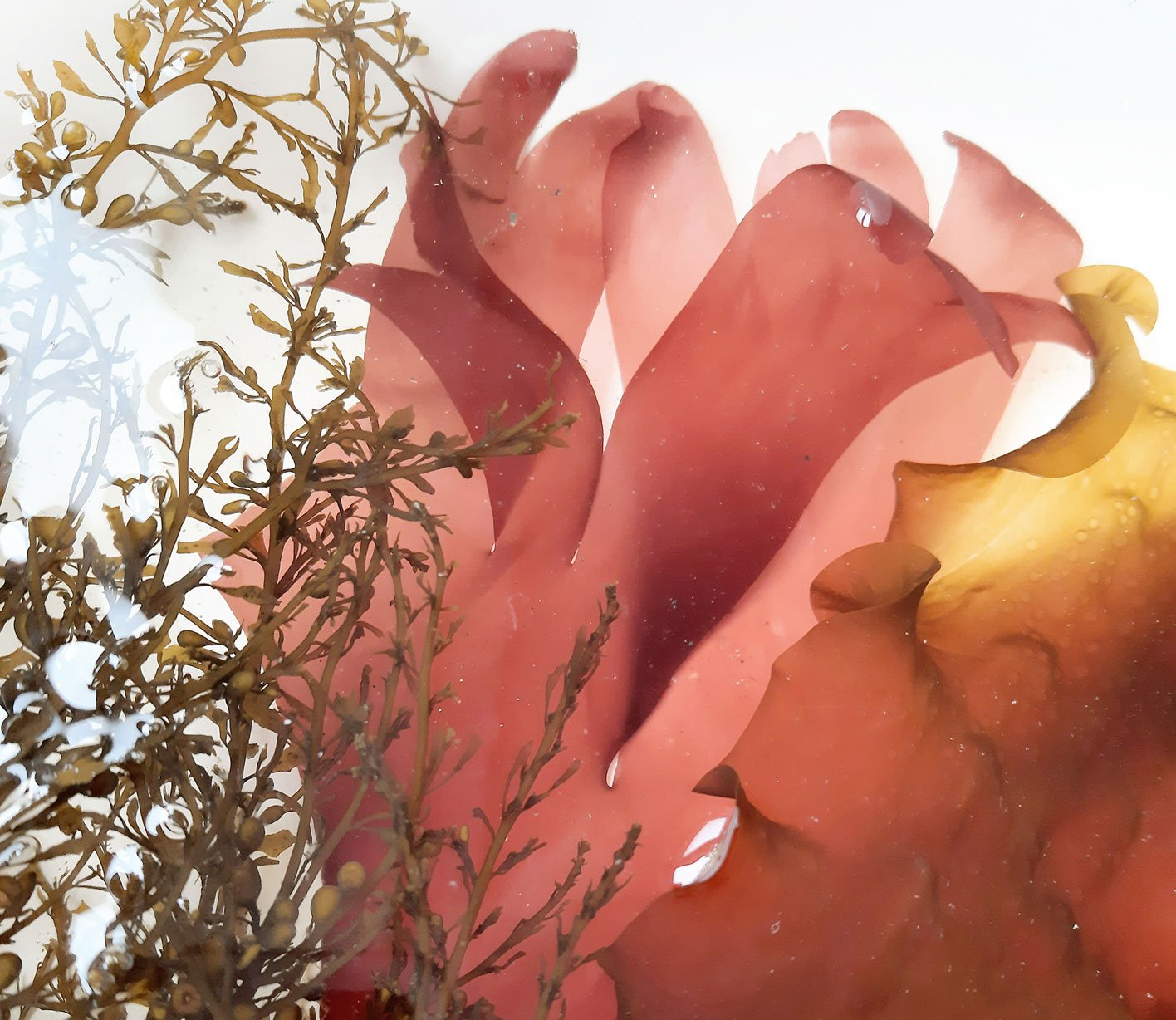
Dulse amongst Wireweed and Kelp
Dulse - the red seaweed shown here is a great addition to sauces, it helps thicken them whilst adding a lovely umami flavour.
You may also be surprised to learn that you've may have been unknowingly consuming seaweed in your day to day life; You can find it in toothpaste and also in some ice cream.
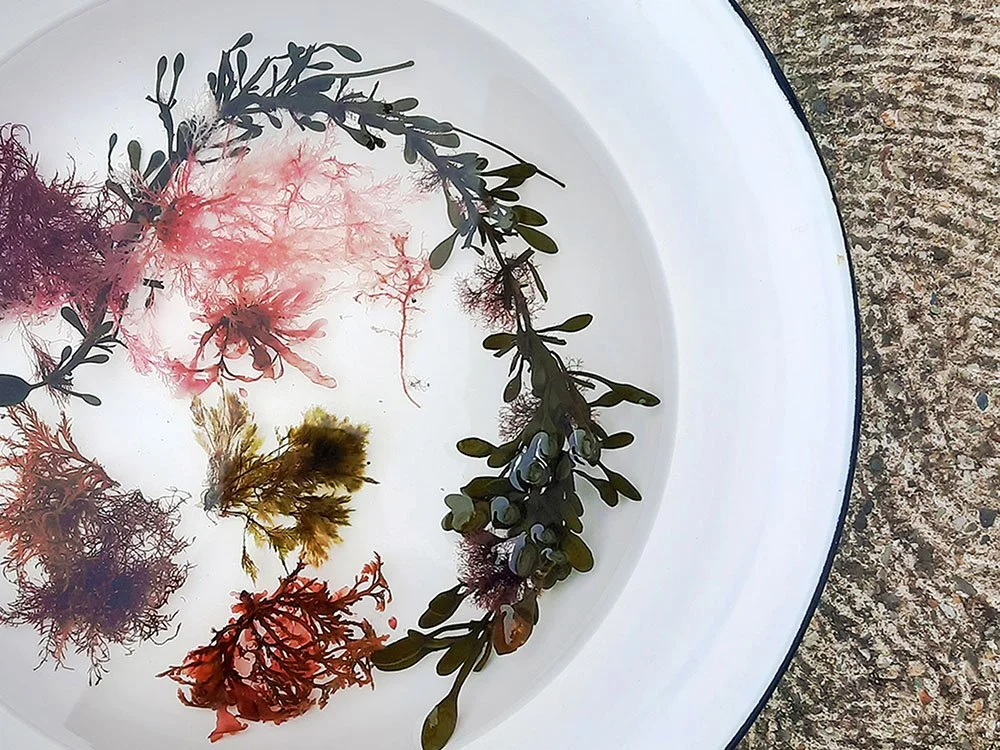
There are estimated to be 6500+ species of Red Seaweed alone.
There is also a belief that land plants evolved from the Green Seaweeds group.
And there you have it—a handful of fascinating seaweed facts that might be new to you! And to be truthful, we didn't know many of these things when we started our seaweed prints journey, but we are really enjoying learning about them along the way.