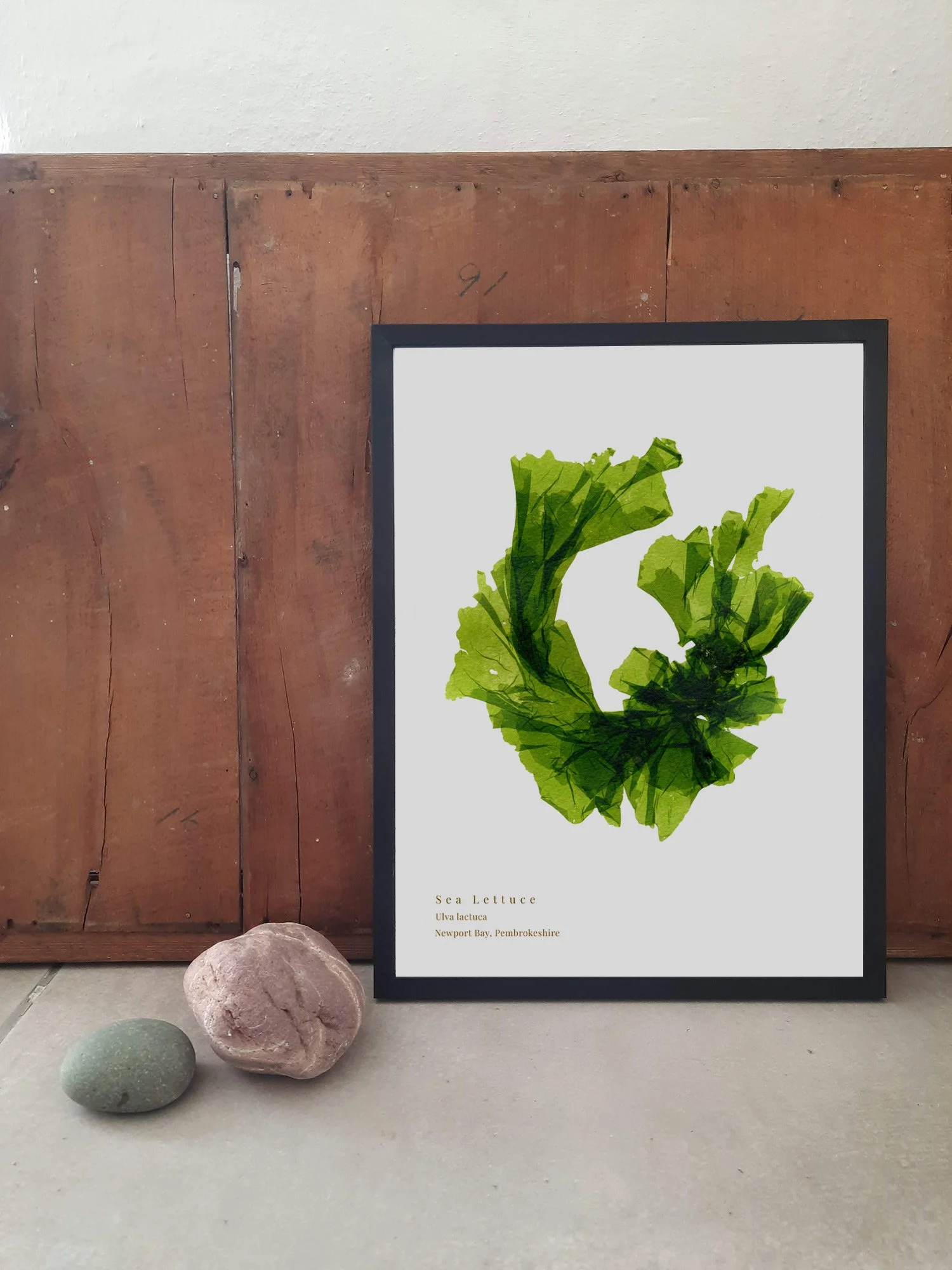
The emerald ribbon of our Pembrokeshire shores - next time you explore a rock pool along the Pembrokeshire coast, look for bright, translucent green fronds rippling just beneath the surface. That is sea lettuce (Ulva lactuca), one of the most common—and ecologically important—green seaweeds on our shores.
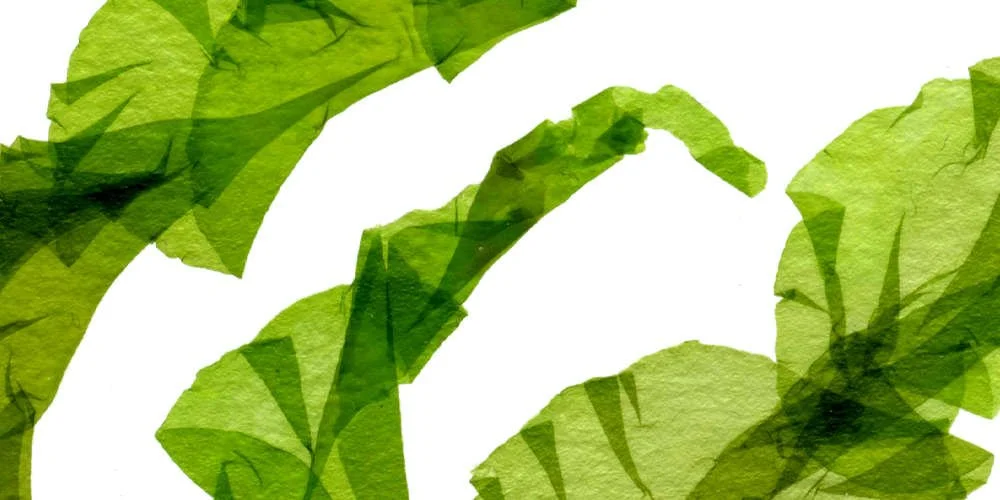
Sea Lettuce Fronds.
Unlike bulky kelps or leathery wracks, sea lettuce has a remarkably simple design:
It’s Paper-thin structure and ruffled, sheet-like fronds are only two cells thick, allowing sunlight and nutrients to pass straight through, and despite looking delicate, those two cell layers are tough enough to withstand waves and drying out briefly at low tide.
It anchors to rocks and shells with a tiny disc-like holdfast, though torn pieces can often break free and can continue growing as floating mats in calm estuaries and pools.
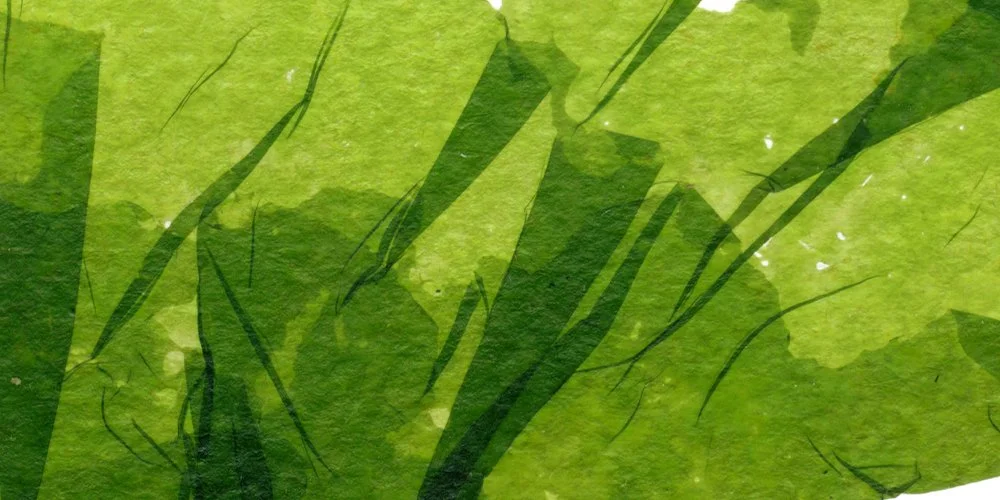
Paper thin fine green fronds.
Its wavy folds provide hiding spots for tiny marine snails, amphipods, and juvenile fish dodging predators at low tide, and you might notice periwinkles, limpets, and coastal birds—such as brent geese—feeding directly on the nutrient-rich fronds.
Because sea lettuce grows rapidly when nutrients are abundant, watching its population helps marine biologists monitor coastal health. While small patches are a normal part of healthy intertidal life, dense, sprawling "green tides" in sheltered estuaries can indicate excess nutrient run-off from surrounding land.
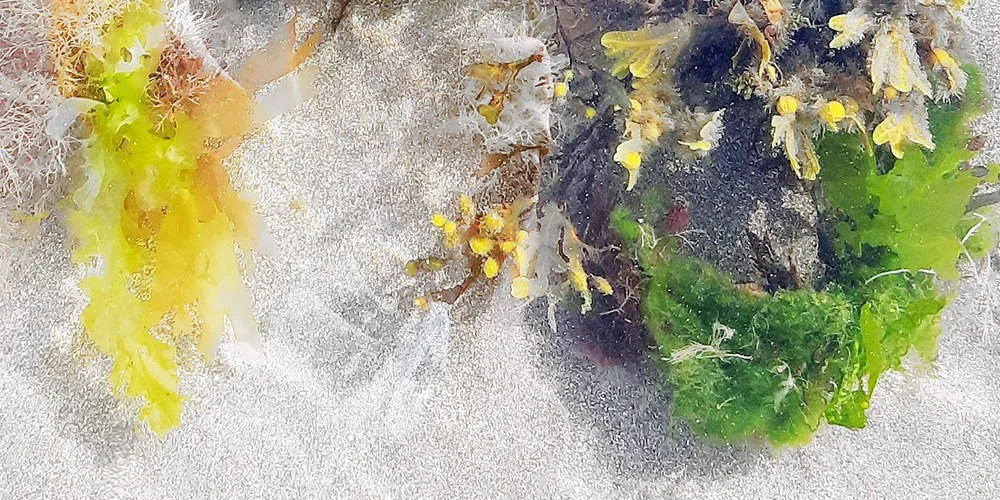
Left side showing sun bleached Sea Lettuce (yellow) and right side is Sea Lettuce’s natural colour (green).
To find Sea Lettuce, search out mid-to-low shore rock-pools and sheltered coves, you will often find Sea Lettuce growing where a fresh water stream flows down onto the beach.
A selection of our Sea Lettuce prints